

If you are considering porcelain veneers, you will likely encounter two distinct stages in the treatment process: a temporary phase and a permanent one. For many patients, this comes as a surprise, and understanding what each stage is for can help you go into the process with realistic expectations.
At Sydney Laser Dental Care, the team uses digital technology and an unhurried consultation process to guide patients through every stage of cosmetic veneer treatment, from the initial assessment through to the final fit.
Quick Overview
- Temporary veneers are short-term placeholders placed on prepared teeth while permanent veneers are being custom-made, and the two are not interchangeable options.
- They may feel slightly different from your natural teeth and are made from a different material than the final restoration, which is worth knowing before the process begins.
- Wearing temporary veneers gives you and your dentist an opportunity to assess shape, proportion, and comfort before the permanent veneers are bonded in place.
- How well the temporary phase goes, and what feedback is gathered during it, can influence how closely the final veneers match your expectations.
- What affects your overall experience, from sensitivity to the feel of the bite, is often shaped by factors specific to your teeth and treatment plan.
Below, we explain what each stage involves, how the two differ, and what to expect while wearing temporary veneers.
What Are Temporary Veneers?
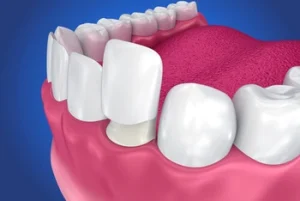 Temporary veneers, also called provisional veneers, are placed on the teeth after preparation and before the permanent porcelain veneers are ready. They are made from composite resin rather than porcelain and are designed for short-term use only.
Their purpose is practical rather than cosmetic. Once the tooth surface has been prepared, it needs protection while the dental laboratory fabricates the final restorations. Temporary veneers seal the surface, reduce sensitivity, and give the patient an interim appearance while that process takes place.
Veneers are thin coverings placed over the front surface of teeth to improve their appearance, and the process typically involves removing a small amount of tooth enamel before the veneer is placed. Because this step is irreversible, the treatment is considered a long-term commitment regardless of the material used.
How Temporary and Permanent Veneers Differ
The most important distinction is that temporary and permanent veneers are not competing options. They are sequential stages of the same process.
Temporary veneers are made chairside from composite resin, fitted the same day as the tooth preparation appointment, and bonded in place with a temporary cement. They protect the prepared teeth and provide an initial sense of the planned tooth shape and length.
Permanent veneers are custom-crafted in a dental laboratory from high-grade porcelain. They are designed to closely mimic the translucency and surface texture of natural tooth enamel and are permanently bonded to the teeth at a second appointment once fabrication is complete.
A peer-reviewed study on provisional restorations published in the International Journal of Dentistry noted that temporary veneers serve several clinical purposes beyond aesthetics: they protect the tooth preparation, allow the patient and dentist to evaluate the planned changes, and provide a template that guides the final fabrication. Any adjustments agreed upon during the temporary phase can be incorporated into the permanent design.
What to Expect While Wearing Temporary Veneers
The experience of wearing temporary veneers varies between individuals, but there are a few things that are worth knowing beforehand.
They may feel slightly bulky: Composite resin does not have the same refined finish as porcelain, and the temporary veneers are built to be functional rather than final. Some patients notice the thickness, particularly in the first few days.
Sensitivity is common: After enamel removal, the prepared teeth may feel more sensitive to hot, cold, or pressure. This usually settles as the temporary veneers protect the surface, but it is normal for some degree of sensitivity to persist until the permanent restorations are in place.
Care requirements are different: Temporary veneers are held in place with temporary cement and are more susceptible to dislodging than permanent ones. Avoid biting directly into hard foods, sticky foods, or anything that requires significant force from the front teeth. Chewing on the back teeth where possible is advisable during this period.
The Transition to Permanent Veneers
At the second appointment, the temporary veneers are carefully removed, and the prepared teeth are cleaned. The permanent porcelain veneers are tried in first without cement to confirm the fit, shade, and contour before anything is bonded permanently.
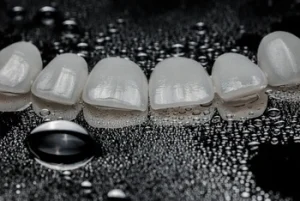 This is an important step. If any adjustments are needed, they are made at this stage. Once both the patient and the treating dentist are satisfied, the veneers are bonded to the teeth using a dental adhesive and light-cured to set.
Some sensitivity in the days following the bonding appointment is normal as the teeth adjust to the permanent restorations. This typically settles within a few days to a week.
Ceramic veneers are made from a mould or digital scan of the tooth, which is taken and sent to a laboratory for the ceramic to be custom-made, and regular dental visits and good oral hygiene are important for maintaining veneers over time.
A Considered Approach to Veneers at Sydney Laser Dental Care
Understanding what the temporary phase is for and what to expect during it helps patients engage more actively in the process and feel more confident when the permanent veneers are placed. The two stages work together, and feedback during the temporary phase plays a direct role in the final outcome.
At Sydney Laser Dental Care, Dr Lawrence Lau and the team take a thorough approach to veneer treatment across all three clinics, with digital scanning and personalised planning at every stage. If you would like to explore whether veneers are suitable for your situation, get in touch with the clinic closest to you.
Sydney Laser Dental Care: visit us at your nearest location or book an appointment online.
- Illawong: (02) 9158 6756
- Sylvania Waters: (02) 9159 6083
- Pyrmont: (02) 9158 6213
Frequently Asked Questions
Are temporary veneers the same as permanent veneers?
No. Temporary veneers are made from composite resin and are placed immediately after the tooth preparation appointment as short-term placeholders. Permanent veneers are custom-made from porcelain in a dental laboratory and are bonded to the teeth at a separate appointment. The two stages are part of the same process, not alternatives to each other.
How long do you wear temporary veneers?
Most patients wear temporary veneers for one to two weeks while the permanent porcelain veneers are being fabricated in the dental laboratory. The exact timeframe depends on the laboratory and the complexity of the case. Your dentist will advise on the expected timeline at your preparation appointment.
Is it normal for temporary veneers to feel uncomfortable?
Some degree of altered sensation is common. Temporary veneers may feel slightly bulkier than your natural teeth, and the prepared teeth may be sensitive, particularly to temperature. This usually settles once the permanent veneers are placed. If discomfort is significant or a temporary veneer comes loose, contact the practice promptly.
Can the shape of the permanent veneers be adjusted based on the temporaries?
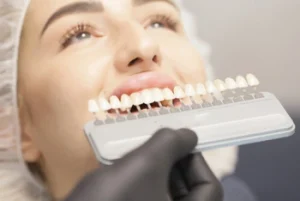 Yes, and this is one of the key purposes of the temporary stage. If you notice anything about the shape, length, or proportion during the time you are wearing the temporary veneers, raise it with your dentist before the permanent veneers are made. Adjustments are far easier to incorporate at that stage than after the final restorations have been bonded.
Do permanent veneers require special care?
Permanent porcelain veneers are durable, but they require consistent oral hygiene and some care with habits. Avoid biting directly into very hard foods such as ice or hard confectionery with the veneer teeth. Grinding or clenching can place excessive force on veneers over time, so a night guard may be advisable if this is a concern. Regular dental check-ups allow the condition of the veneers to be monitored.
References
Healthdirect Australia. (2024). ‘Veneers’. Healthdirect. Canberra, ACT: Australian Government Department of Health. https://www.healthdirect.gov.au/veneers
Hammond, B.D., Machowski, M., Londono, J. and Pannu, D. (2022). ‘Fabrication of Porcelain Veneer Provisional Restorations: A Critical Review’. International Journal of Dentistry, 15 March. London: Hindawi. https://pmc.ncbi.nlm.nih.gov/articles/PMC9952524/
Better Health Channel. (n.d.). ‘Cosmetic Dentistry and Teeth Whitening’. Better Health Channel. Melbourne, VIC: Victorian Government Department of Health. https://www.betterhealth.vic.gov.au/health/conditionsandtreatments/cosmetic-dentistry-and-teeth-whitening


