

Not all dental veneers are made the same way. The distinction between indirect and direct veneers is one that often surprises patients, and it has real implications for how the treatment unfolds, what the end result looks like, and how well it holds up over time.
At Sydney Laser Dental Care, the team uses advanced in-house technology to create porcelain veneers and cosmetic restorations that suit the individual. Understanding the difference between indirect and direct approaches is a useful starting point for anyone exploring their options.
Quick Overview
- Indirect veneers are custom-made restorations fabricated outside the mouth, either in a dental laboratory or using in-house milling technology, before being bonded to the tooth.
- They may suit patients looking to address discolouration, chips, gaps, or shape irregularities in the anterior teeth, though not every case will require an indirect approach.
- The process typically involves tooth preparation, impressions or digital scanning, a fabrication stage, and a bonding appointment. What this looks like in practice can vary depending on the material and technology used.
- Material choice, the extent of tooth preparation required, and individual bite and lifestyle factors can all influence how the restoration performs over time.
- Whether indirect veneers are the right option for your situation depends on an assessment that considers both clinical and aesthetic factors.
Keep reading to understand how indirect veneers work, how they compare to direct alternatives, and what tends to influence outcomes.
What Are Indirect Veneers?
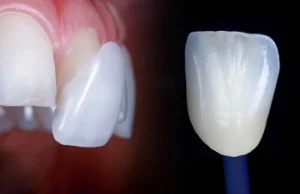 Indirect veneers are thin shells of material, typically porcelain or composite resin, that are custom-fabricated away from the patient’s mouth, then bonded to the front surface of the tooth at a separate appointment.
The “indirect” part of the name refers to where the restoration is made. Rather than being built up directly on the tooth in the chair, the veneer is created from an impression or digital scan of the prepared tooth, then shaped and finished before being cemented into place.
This process allows for a higher level of detail in the final form and surface quality of the veneer than is typically achievable in a single chairside appointment. In most cases, the cost is higher than that of a direct composite approach.
Indirect Veneers vs Direct Veneers: The Key Differences
Direct veneers are applied and shaped entirely in the chair in a single visit, using composite resin that is built up, sculpted, and polished by the dentist. Indirect veneers are fabricated in a lab or milled in-house, then bonded at a second appointment.
A randomised 3-year veneer trial compared indirect composite and ceramic laminate veneers and found that surface quality changes were more frequent in indirect composite veneers, with ceramic veneers showing more stable surface characteristics over time. Both types demonstrated acceptable clinical performance over the follow-up period, though the study noted that material choice plays a meaningful role in long-term outcomes.
Direct veneers typically involve less preparation of the natural tooth and can be completed more quickly. They are often preferred when the concern is minor, the patient is younger, or when a reversible option is preferred. Indirect veneers tend to offer better colour stability, surface durability, and precision fit, particularly for cases where more significant changes to shape or shade are involved.
Porcelain or Indirect Composite: Which Material?
Two primary material choices exist for indirect veneers: porcelain (ceramic) and composite resin.
Porcelain indirect veneers are fabricated in a dental laboratory or milled from ceramic blocks using CAD/CAM systems. They closely mimic the translucency and light-reflecting properties of natural tooth enamel and offer strong resistance to staining. Porcelain is the material of choice in most indirect veneer cases at established dental practices.
Indirect composite veneers are made from high-grade composite resin, but fabricated outside the mouth rather than applied directly. They can be repaired more easily than porcelain if chipped, and in some cases involve less tooth reduction.
A 7-year composite veneer study evaluated the clinical survival of no-preparation indirect composite laminate veneers and found a survival rate of 86.4% at seven years, with the main causes of failure being fracture and debonding. The study concluded that indirect composite veneers can be a viable option in selected cases, particularly where minimal preparation is appropriate.
The choice between materials is not purely aesthetic. It depends on the clinical situation, the amount of change required, the condition of the existing enamel, and patient-specific factors, including habits such as teeth grinding.
What the Procedure Typically Involves
Indirect veneer treatment generally unfolds across at least two appointments.
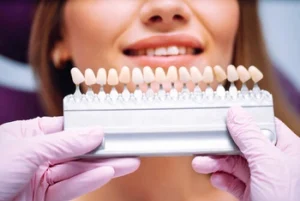 At the first visit, the teeth are lightly prepared: the extent of preparation depends on the material and the case. An impression or digital scan is taken, from which the veneers are fabricated. Temporary veneers may be placed while the permanent restorations are being made.
At the second appointment, the temporary veneers are removed, the teeth are prepared for bonding, and the finished veneers are cemented using a dental adhesive and light-cured bonding agent. The fit, shade, and occlusion are checked before the restoration is finalised.
At Sydney Laser Dental Care’s Pyrmont clinic, CEREC in-house milling technology allows certain restorations to be completed in a single visit by scanning, designing, and milling the veneer on-site rather than sending it to an external laboratory.
A Considered Approach to Veneers at Sydney Laser Dental Care
Indirect veneers involve clinical and aesthetic decisions that benefit from a thorough conversation before any treatment begins. Veneer longevity and reversibility vary depending on the material and how much enamel was removed during preparation, which is why understanding exactly what the procedure will involve is an important part of the consultation process.
At Sydney Laser Dental Care, Dr Lawrence Lau and the team take time to assess each patient’s teeth, discuss the options, and explain what the treatment involves before anything proceeds. Across three modern clinics, the practice offers the technology and expertise to plan veneer treatment with care and precision.
To explore whether indirect veneers may be suitable for your situation, get in touch with the clinic that suits you best.
Sydney Laser Dental Care: visit us at your nearest location or book an appointment online.
- Illawong: (02) 9158 6756
- Sylvania Waters: (02) 9159 6083
- Pyrmont: (02) 9158 6213
Any surgical or invasive procedure carries risks. Before proceeding, you should seek a second opinion from an appropriately qualified health practitioner.
Frequently Asked Questions
Are indirect veneers better than direct veneers?
Neither approach is universally better. Indirect veneers tend to offer greater colour stability and surface durability, particularly in porcelain, while direct composite veneers can be completed in a single visit and are often more easily adjusted or repaired. The right choice depends on the clinical situation, the extent of the change required, and individual factors that your dentist will assess at a consultation.
 How long do indirect porcelain veneers last?
Clinical longevity varies depending on the material, the quality of the bonding, oral hygiene, and habits such as grinding. Porcelain veneers have demonstrated strong survival rates in clinical studies, with many lasting ten years or more when well maintained. Individual outcomes vary, and a proper assessment is needed to understand what to expect for your specific situation.
Do indirect veneers require a lot of tooth preparation?
The extent of preparation varies. Some cases require minimal or no reduction of the natural tooth structure, while others require more, depending on the desired change in shape or the condition of the existing tooth. Your dentist will explain what preparation is needed before any work begins.
Can indirect veneers be repaired if they chip or break?
Porcelain veneers, if chipped, generally require replacement rather than repair, as bonding additional material to porcelain is technically challenging. Indirect composite veneers can sometimes be repaired more readily. Your dentist will advise on the options if a veneer is damaged.
References
Gresnigt, M.M.M., Kalk, W. and Özcan, M. (2013). ‘Randomized Clinical Trial of Indirect Resin Composite and Ceramic Veneers: Up to 3-year Follow-up’. Journal of Adhesive Dentistry, 15(2). Carol Stream, IL: Quintessence Publishing. https://pubmed.ncbi.nlm.nih.gov/23534025/
Hepdeniz, O.K. and Temel, U.B. (2023). ‘Clinical survival of No-prep indirect composite laminate veneers: a 7-year prospective case series study’. BMC Oral Health, 3 May. London: BioMed Central. https://www.ncbi.nlm.nih.gov/pmc/articles/PMC10158390/
Healthline Editorial Team. (2023). ‘How Long Do Veneers Last?’. Healthline, updated 2023. San Francisco, CA: Healthline Media. https://www.healthline.com/health/how-long-do-veneers-last


