

Shade selection is one of the most consequential decisions in the veneer process. Unlike shape or size, which can feel more intuitive, choosing a veneer shade involves a set of variables that are not always obvious: lighting conditions, skin tone, the colour of surrounding untreated teeth, and the difference between how a shade looks on a card versus in a person’s mouth.
Many people approach this decision with a single goal in mind: whiter teeth. But the relationship between veneer shades and a natural-looking result is more layered than that. Understanding what influences shade selection, and what common missteps to avoid, is useful preparation before considering cosmetic dental treatment.
Quick Overview
- Veneer shades refer to the colour range available for porcelain or composite shells bonded to the front of teeth.
- Shade selection may draw on skin tone, eye colour, surrounding tooth colour, and lighting, with factors that vary significantly between patients.
- A shade that appears natural in one context may look stark or artificial in another, which is why in-person assessment matters.
- Porcelain veneer shades are fixed once placed and cannot be altered by whitening, so the decision made at consultation carries long-term weight.
- A clinical shade assessment guides which options are appropriate for your teeth and overall appearance.
Keep reading to understand how veneer shades are categorised, what affects how they look in real life, and what to discuss at a consultation.
How Are Veneer Shades Categorised?
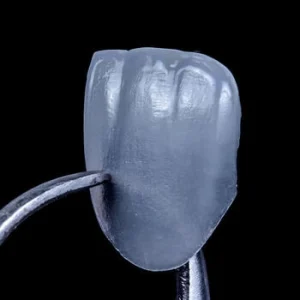 Dental shade guides used in veneer selection organise tooth colour into categories based on hue, value, and chroma. The most widely used guide in clinical settings divides shades into four main groups: reddish-brown (A), reddish-yellow (B), grey (C), and reddish-grey (D). Within each group, there are multiple gradations, giving a broad range of tones from warmer and more natural to cooler and brighter.
Beyond this standard range, there is also a separate bleach shade scale, sometimes labelled BL1 through BL4. These shades sit outside the natural tooth colour spectrum and represent progressively brighter whites. BL1 is the most intense white on this scale. Shades in this range are what people typically picture when they think of a “Hollywood white” result.
Understanding where these categories sit in relation to your own teeth is the starting point for shade selection. Your dentist will use a physical shade guide alongside clinical assessment to establish your baseline tooth colour and identify which shade range is appropriate for your situation.
What Factors Affect How a Veneer Shade Looks?
Shade selection is not simply a matter of picking a colour from a chart. Several factors influence how a veneer shade appears once placed, and these can differ from how it looked during the selection process.
Skin tone and complexion. Warmer skin tones with yellow or olive undertones tend to suit warmer veneer shades, as cooler or very bright whites can appear stark by contrast. Cooler or fairer complexions may carry a wider range of shades without the same contrast effect. This is a general guide rather than a fixed rule, and individual variation means the assessment needs to be made in person.
Eye colour. The whites of the eyes are sometimes used as a reference point. Choosing a veneer shade that is noticeably brighter than the whites of your eyes can make the result look artificial. A shade that sits close to or slightly lighter than the eye white tends to read as more natural.
Lighting conditions. A shade selected under the cool fluorescent lighting of a dental clinic may look different in natural daylight or warm indoor light. Natural daylight tends to reveal more variation in shade and translucency than artificial lighting. A good shade assessment accounts for how the result will appear across different environments, not only under clinical conditions.
Surrounding untreated teeth. For patients having veneers on some teeth only, the shade of the veneered teeth needs to sit consistently with the teeth not being treated. Porcelain veneers are stain-resistant and cannot be bleached once placed, which is why any whitening of untreated teeth is best completed before veneer shade selection, not after.
The number of veneers being placed. A full set of front veneers allows more latitude in shade because the entire visible smile line can be planned as a unit. A single veneer or a partial set requires a closer match to the existing natural tooth colour.
Common Mistakes in Veneer Shade Selection
Understanding what to avoid is as useful as understanding what to look for.
Choosing the brightest available shade. The brightest shades on a bleach scale are not inherently the best choice. A shade that is significantly whiter than the surrounding untreated teeth, the whites of the eyes, or what suits the patient’s complexion can look out of place and make the cosmetic work obvious. The goal is a result that fits the patient’s overall appearance, not simply the whitest option available.
Assessing shades under a single light source. A shade that looks right under clinic lighting may shift under natural daylight. Lighting is one of several variables a dentist will consider alongside the colour and shape of surrounding teeth when planning a veneer result. If only one lighting environment is used, the assessment may not capture how the result will look in daily life.
Not considering the long-term picture. Porcelain veneers are a long-term commitment. The colour cannot be changed after placement, and the surrounding natural teeth may shift slightly in shade over time through staining or natural ageing. Selecting a shade that fits well now and has some tolerance for that variation is a more considered approach than optimising purely for the brightest initial result.
What to Discuss at a Shade Consultation
Shade selection works best as a conversation between patient and dentist rather than a unilateral decision by either party. Some specific points worth raising:
Bring reference images if you have a clear sense of the result you are looking for. Real photographs of smiles with shades that appeal to you are more useful than abstract descriptions of “natural” or “bright.”
Ask to see the shade guide under different lighting, including natural light if possible. Temporary veneers or mock-up trials before final placement can also help you visualise how a shade looks in your mouth rather than on a card.
Discuss whether you plan to whiten any untreated teeth. If so, complete that process first and allow the shade to stabilise before selecting the veneer colour.
Be clear about which way you want to go if you are uncertain between two shades. Your dentist can advise on which will be more forgiving given your complexion, the number of veneers, and the surrounding tooth colour. Individual outcomes vary, and the right shade for one patient may not suit another with similar goals.
A Considered Approach to Veneer Shades
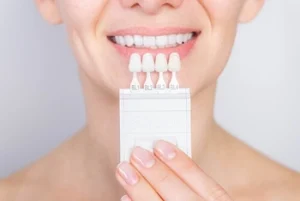 Choosing the right veneer shade is a decision that benefits from preparation and a thorough clinical assessment. The factors involved, including skin tone, lighting, surrounding teeth, and the scope of treatment, mean that what reads as natural varies from person to person. A shade selected carefully at consultation is one that is more likely to sit well across different lighting conditions and different stages of the long-term result.
At Sydney Laser Dental Care, our dentists discuss shade options in detail at consultation, using shade guides and clinical assessment before any recommendation is made. Individual outcomes vary, and the aim is always a result that suits the individual patient.
If you would like to discuss veneer shades or explore whether veneers may be appropriate for your teeth, we welcome you to contact one of our three clinics.
- Illawong: (02) 9158 6756
- Sylvania Waters: (02) 9159 6083
- Pyrmont: (02) 9158 6213
Note: Any surgical or invasive procedure carries risks. Before proceeding, you should seek a second opinion from an appropriately qualified health practitioner.
Frequently Asked Questions
What veneer shade looks most natural?
A natural-looking result usually reflects the patient’s own skin tone, eye colour, and the shade of surrounding untreated teeth. Shades that sit within or slightly above the natural tooth colour range tend to read as more natural than the brightest bleach-scale options. What looks natural varies between individuals, and an in-person assessment is the most reliable guide.
Can veneer shades be changed after placement?
No. Once porcelain veneers are bonded to the tooth, the shade is fixed. Whitening products cannot alter porcelain, so the colour selected at consultation is the permanent result. This is why careful shade selection before placement matters, and why whitening any untreated teeth before the consultation is advisable if that is part of the plan.
References
Healthdirect Australia. (2025). ‘Veneers’. Healthdirect, February. Canberra, ACT: Australian Government Department of Health. https://www.healthdirect.gov.au/veneers
Department of Health and Human Services. (2025). ‘Cosmetic Dentistry and Teeth Whitening’. Better Health Channel, 12 December. Melbourne, VIC: State Government of Victoria. https://www.betterhealth.vic.gov.au/health/conditionsandtreatments/cosmetic-dentistry-and-teeth-whitening
Australian Dental Association. (n.d.). ‘Crowns, Bridges and Veneers’. Teeth.org.au. St Leonards, NSW: Australian Dental Association. https://teeth.org.au/crowns-bridges-and-veneers


