

Choosing a veneer shape is one of the more personal decisions in cosmetic dentistry. Unlike a filling or crown, a veneer alters how the front surface of your tooth looks to everyone who sees you. The shape chosen influences proportion, balance, and how the result sits alongside the rest of your natural teeth.
People often assume veneer shape is a straightforward choice: pick something you like and your dentist makes it happen. In practice, the process is more considered than that. Shape selection draws on tooth proportions, facial features, skin tone, the existing bite, and the number of teeth being treated. Understanding what goes into that process helps you have a more productive conversation at your consultation about cosmetic dental treatment.
Quick Overview
- Veneer shape refers to the outline, length, and curvature of the porcelain or composite shell placed on the front of a tooth.
- Shape selection may draw on facial features, tooth proportions, and the appearance of existing teeth, though several factors vary between patients.
- Porcelain and composite veneers differ in how shape is determined and refined during treatment.
- What looks natural on one patient may not suit another, which is why shade, length, and edge curvature are assessed together.
- An initial consultation and clinical assessment guide which shapes are realistic for your tooth structure and oral health.
Keep reading to understand how veneer shape is selected, what the key variables are, and what to expect at different stages of the process.
What Does Veneer Shape Actually Mean?
Veneer shape describes the overall outline, length, width, and edge curvature of the shell that bonds to the front of the tooth. It is not a single fixed measurement but a combination of proportions that together determine how the tooth looks in context.
The shape affects whether the result appears long or short, square or rounded, bold or understated. It also influences how individual teeth relate to adjacent ones. A veneer placed on a single tooth, for example, needs to reflect the shape of the teeth on either side. A full set of front veneers involves a more deliberate design decision where the overall smile line is considered as a whole.
How Does Facial Structure Influence Veneer Shape?
Facial features are one reference point dentists use when discussing veneer shape options, though they are not the only consideration. The general principle is that veneer shape works best when it complements rather than contrasts with the broader face.
 Broader or more angular facial features may suit a squarer, more structured tooth shape. More oval or softer facial features may complement a shape with more curvature at the edges. Prominently angled canines can also influence how the overall arch looks, and veneer shape planning sometimes accounts for how the canines will appear alongside the central and lateral incisors.
Skin tone and hair colour are sometimes referenced during shade and shape planning because they affect how light reflects off the teeth. A shape that looks proportionate in a dental photograph may look different in natural light depending on complexion. Veneers are custom-made for each patient, and a dentist will match the colour and shape of the veneers to your surrounding teeth to achieve as natural a result as possible.
These are guidelines, not fixed rules. No single face shape maps to a single tooth shape. Clinical judgment, photographs, and digital planning tools are used alongside these principles to help guide decisions that suit the individual patient.
What Are the Main Veneer Shape Styles?
Veneer shape styles are typically described along a spectrum from square and structured to rounded and softer. Within that range, dentists and dental laboratories refer to a range of styles based on edge curvature, incisal length, and tooth width proportions.
Square and structured shapes feature straighter incisal edges and more angular transitions between the central and lateral incisors. These shapes are often described as giving a bolder, more defined appearance to the smile. They are frequently chosen for upper central incisors that are being treated as part of a full arch case.
Rounded and softer shapes feature curved incisal edges and more gradual transitions between teeth. These shapes sit closer to what many people associate with a natural-looking result, particularly for patients with smaller teeth or softer facial features.
Tapered shapes involve a longer central incisor with more gradual narrowing toward the canines. These can create a sense of length and symmetry that suits certain face proportions better than a uniform square shape.
Natural or asymmetric shapes aim to replicate the subtle irregularities present in unrestored teeth. Not every tooth in a natural smile is perfectly even. For patients seeking a result that does not read as cosmetically altered, a more natural shape with minor intentional variation may be the preferred approach.
The right style depends on how many teeth are being treated, the existing tooth structure, and what the patient wants the overall result to look like. Individual outcomes vary, and no shape style produces the same result across different patients.
Porcelain vs Composite: How Does Material Affect Shape?
Material choice has a practical effect on how veneer shape is created and refined. The two main options, porcelain and composite resin, differ in this respect.
Porcelain veneers are fabricated in a dental laboratory from a digital scan or physical impression taken at your first appointment. Shape decisions are made at the planning and design stage, before fabrication begins. Some enamel removal may be needed before the veneer is fitted to ensure it sits correctly and does not feel bulky. Temporary veneers worn between appointments give some indication of how the final shape will look, though the final porcelain result differs in surface finish and light reflection from temporaries.
Composite resin veneers are applied directly to the tooth by the dentist in a single appointment. The shape is sculpted chairside, which allows for more immediate adjustment during the visit. This can suit patients who want a more iterative shaping process. Composite is generally less stain-resistant than porcelain and may require more maintenance over time.
Both materials can achieve a range of shapes. The choice of material affects how shape decisions are made, how long the treatment takes, and how the surface performs over time. Your dentist can explain which material is more appropriate for your clinical situation.
How Is Veneer Shade Selected?
Shade selection works alongside shape to determine the final result. The dental shade guide used in clinical settings categorises tooth colour into four main groups: reddish-brown (A), reddish-yellow (B), grey (C), and reddish-grey (D). Within each group, there are further gradations, giving dentists a broad range of tones to match or refine.
For patients treating a single tooth, the target is usually to match the surrounding teeth as closely as possible. For patients treating a full set of front teeth, there is more latitude in shade selection, though the chosen shade still needs to sit believably alongside the untreated teeth behind it.
Dentists typically aim for a shade that is consistent with the patient’s natural tooth colour rather than significantly lighter. Selecting a shade that is too far from the patient’s natural teeth can result in a result that does not read as natural. The ADA Australia’s guidance on caring for veneers at home notes that veneers still need consistent brushing, flossing, and regular dental check-ups to maintain their appearance over time.
Shade is assessed under clinical lighting and sometimes in natural light. Photography is often used to compare shades across different conditions. Skin tone and eye colour are occasionally referenced as part of this process since they affect how white or warm a shade appears in different contexts.
What Happens at the Consultation and Beyond?
The initial consultation for veneers involves more than measuring teeth. It is the stage at which shape and shade preferences are discussed, clinical suitability is assessed, and realistic expectations are established.
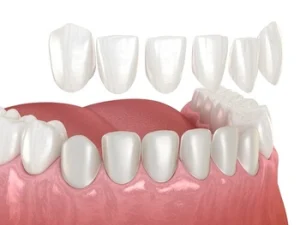 At this stage, your dentist will assess your bite, gum health, existing enamel, and the condition of the teeth being treated. Veneers are not appropriate for teeth with active decay or gum disease, and those conditions need to be resolved before any cosmetic work begins. Patients who grind or clench their teeth may also face limitations on veneer candidacy.
Photographs, digital smile design tools, and sometimes a diagnostic wax-up can help communicate how a proposed shape might look before treatment begins. These are planning tools, not guarantees of the final result. Outcomes vary depending on the individual tooth structure, the material used, and how the final restoration is bonded and finished.
Good oral hygiene after placement supports both the longevity of the veneers and the health of the teeth beneath them. Veneered teeth require the same twice-daily brushing and daily flossing as natural teeth, and regular check-ups allow any wear, marginal changes, or shade shift to be detected and managed early. Individual outcomes vary, and your dentist is best placed to advise on what is realistic for your teeth and situation.
A Considered Approach to Veneer Shape
Veneer shape is not a decision that needs to be made before you walk into a consultation. It is something that develops through conversation with your dentist, informed by clinical assessment of your teeth, your facial features, the number of veneers being placed, and your own preferences for how the result should look.
At Sydney Laser Dental Care, our dentists approach veneer treatment as a considered process, with shape and shade discussed in detail before any preparation begins.
If you would like to discuss whether veneers may be suitable for your teeth, we welcome you to contact one of our three clinics.
- Illawong: (02) 9158 6756
- Sylvania Waters: (02) 9159 6083
- Pyrmont: (02) 9158 6213
Note: Any surgical or invasive procedure carries risks. Before proceeding, you should seek a second opinion from an appropriately qualified health practitioner.
Frequently Asked Questions
What veneer shape looks most natural?
A natural-looking result typically reflects the proportions of the patient’s own teeth and sits consistently with adjacent untreated teeth. Shapes with subtle edge curvature and minor variation between teeth tend to read as less cosmetically altered than uniformly square or very symmetrical designs. What looks natural depends on the individual patient’s tooth structure, facial features, and the number of veneers being placed.
Does face shape determine veneer shape?
Face shape is one reference point in veneer selection, but it is not the only factor. Tooth proportions, existing bite, skin tone, and the patient’s aesthetic preference all contribute. Dentists use face shape as a general guide alongside clinical assessment, photographs, and digital planning tools. No single face shape maps directly to one veneer style.
References
Healthdirect Australia. (2025). ‘Veneers’. Healthdirect, February. Canberra, ACT: Australian Government Department of Health. https://www.healthdirect.gov.au/veneers
Department of Health and Human Services. (n.d.). ‘Cosmetic Dentistry and Teeth Whitening’. Better Health Channel. Melbourne, VIC: State Government of Victoria. https://www.betterhealth.vic.gov.au/health/conditionsandtreatments/cosmetic-dentistry-and-teeth-whitening
Australian Dental Association. (n.d.). ‘Crowns, Bridges and Veneers’. Teeth.org.au. St Leonards, NSW: Australian Dental Association. https://teeth.org.au/crowns-bridges-and-veneers
Australian Dental Association. (2025). ‘Policy Statement 2.2.3 – Oral Hygiene’. Australian Dental Association, October. St Leonards, NSW: Australian Dental Association. https://ada.org.au/policy-statement-2-2-3-oral-hygiene


