
A gap where a tooth used to be, worn edges on the teeth beside it, and a bite that feels different when you chew can leave you asking: can you get veneers with missing teeth? You may also notice that the teeth around the space look uneven, or that food catches in the gap when you eat. It’s natural to hope that one treatment could tidy everything up at once.
Veneers often come to mind first, because they’re known for changing how teeth look. A missing tooth adds a few extra considerations, though, and the answer depends on what’s happening in your mouth. Understanding how veneers and other cosmetic dentistry options fit around a gap can help you feel clearer about your choices before you decide.
Quick Overview
- Veneers are thin, custom-made shells bonded to existing teeth, so they need a natural tooth underneath.
- They may suit the teeth around a gap, while the space itself is often filled with a separate tooth replacement.
- In many cases, veneers and tooth replacement are planned together, so colour and shape look consistent.
- Gum health, the amount of healthy enamel, your bite and how long a tooth has been missing can all influence what’s suitable.
- An assessment of your dental health, including your gums and jawbone, usually guides the next steps.
Below, we explain how veneers fit around missing teeth, why the gap matters and what planning involves.
Can Veneers Replace a Missing Tooth?
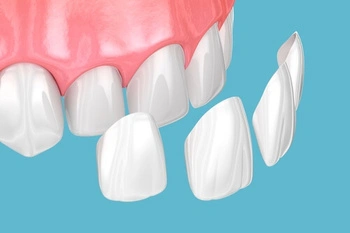
No, a veneer can’t replace a missing tooth on its own. Dental veneers are thin shells of porcelain or composite resin that cover the front surface of a natural tooth, so they need a tooth to bond to. Where a tooth is missing, there’s nothing for a veneer to attach to.
That doesn’t rule veneers out. You may still be able to get veneers on your other teeth, provided they’re healthy, while the gap left by the missing tooth is restored in a different way. Veneers are cosmetic enhancements for teeth that are stained, chipped, worn or mildly crooked, so they work with what’s already there rather than adding a new tooth.
How Veneers Work Alongside Tooth Replacement
When you’re considering veneers with missing teeth, your dentist looks at your whole smile rather than one tooth at a time. The aim is to restore the space and improve the appearance of the surrounding teeth together.
Several different types of artificial teeth can replace missing teeth:
- Dental implants: usually a small titanium post placed in the jawbone, topped with a custom-made dental crown.
- Dental bridges: a replacement tooth, usually held in place by crowns on the teeth either side of the space.
- Partial dentures: removable dentures that replace one or more teeth and clip onto your existing teeth.
The colour of the crown, bridge or denture teeth can be matched to your veneers, so your smile reads as one. Your dentist will explain which approach may suit your mouth, as the right combination depends on your individual situation.
Why the Gap Matters Before Veneers Are Placed
A space left by tooth loss doesn’t stay the same over time. Once a tooth is gone, neighbouring teeth can lean into it, which can affect your bite.
The bone changes too. After a tooth is removed, the jaw ridge can narrow considerably, losing up to half its original width, with most of this change happening in the first eight weeks. This bone loss can affect which tooth replacement options may be suitable later, particularly near the front of the mouth.
For these reasons, your dentist will usually include the gap created by a missing tooth in the same plan, rather than placing veneers first.
What Affects Whether Veneers Are Suitable for You?
Suitability depends on the health of your remaining teeth and gums, how much enamel those teeth have, how your teeth meet and how many teeth are missing.
- Enamel and tooth structure: Veneers rely on a strong bond to the tooth surface. A systematic review found that veneers bonded to enamel failed less often than those bonded to the deeper dentine layer. Heavily filled or broken teeth may be better suited to a crown.
- Gum and tooth health: Gum disease and tooth decay are usually treated first, because veneers need healthy teeth and gums around them. Loose teeth also need assessment before other dental treatments are planned.
- Your bite and habits: Clenching or grinding can place extra load on porcelain, so your dentist may check how your teeth meet and discuss ways to protect them.
- How many teeth are missing: Multiple missing teeth can change how your bite is supported, which may call for a broader plan than a single gap.
- Your smile goals: Whether you’d like to change the shape, colour, or overall appearance of your teeth helps guide the choice between porcelain and composite veneers.
What Planning Veneers With Missing Teeth Involves
Planning usually starts with a full check of your oral health. Your dentist may take X-rays and digital scans to look at the bone where the tooth is missing and the teeth that might receive veneers.
From there, the order of treatment is worked out. If an implant is part of your plan, it’s usually placed first, because the bone needs time to heal around it before the final crown is fitted. A temporary option may fill the space in the meantime, and the final crown and veneers can then be planned so their colour and shape match.
When the foundation is ready, the teeth chosen for veneers are prepared, which usually involves removing a thin layer of enamel. This step can’t be reversed. Results vary between individuals, and your dentist will talk you through each stage before any dental work begins.
Planning Veneers Around the Gaps in Your Smile
A gap left without a plan can affect how your remaining teeth sit and how much bone is available, so timing matters when veneers are part of the picture. At Sydney Laser Dental Care, we plan cosmetic treatment around your smile goals, oral health and facial balance, and our dentists use digital imaging to show you what they find around the gap. We explain each option clearly and work at your pace, so you can decide what feels right for you. To talk through whether veneers may suit your smile, please call us.
- Illawong: (02) 9158 6756
- Sylvania Waters: (02) 9159 6083
- Pyrmont: (02) 9158 6213
Frequently Asked Questions
Can veneers close small gaps between my front teeth?
Small spaces between natural teeth, rather than spaces from a missing tooth, can sometimes be closed by making veneers slightly wider than the original teeth. Whether this looks natural depends on the size of each gap and your tooth proportions. Wider spaces may suit orthodontic treatment first, so the veneers don’t end up looking oversized.
Can I get veneers if I wear a partial denture?
Often, yes. Veneers can go on suitable natural teeth, while the denture continues to replace the missing ones. If the denture clips onto a tooth that receives a veneer, the denture may need adjusting or remaking, because the shape of that tooth changes.
Can you get veneers with missing back teeth?
You can, but your dentist will look closely at how your bite is supported first. When back teeth are missing, more biting force can fall on the front teeth, which may place extra strain on veneers and other restorations there. For this reason, replacing missing back teeth is often part of the plan.
Can a tooth next to a gap have a veneer?
It can, if the tooth is healthy and has enough enamel. If that tooth will support a bridge, though, it’s usually covered with a crown instead, because the crown forms part of the bridge. With an implant, the neighbouring teeth aren’t needed for support, so they remain available for veneers.
How soon after a tooth is removed can I get veneers?
The gum and bone around an extraction site keep changing as they heal, often over a couple of months. Because the gum line affects how teeth and veneers look side by side, your dentist may suggest waiting until the area has settled. Timing also depends on which tooth replacement you choose.
References
Healthdirect Australia. Dental bridge. https://www.healthdirect.gov.au/procedures/dental-procedures-and-appliances/dental-bridge
Ronsivalle V, Santonocito S, Giudice R, et al. The Role of Hyaluronic Acid in Alveolar Ridge Preservation: A Systematic Review. Biomedicines. 2025;13(2):451. https://www.mdpi.com/2227-9059/13/2/451
Çötert İ, Çötert HS. Survival of Partial Laminate Veneers and Categorical Covariates Affecting the Survival: A Systematic Review. The Open Dentistry Journal. 2023;17:e187421062308280. https://opendentistryjournal.com/VOLUME/17/ELOCATOR/e187421062308280/ABSTRACT/
Better Health Channel. Dentures. https://www.betterhealth.vic.gov.au/health/conditionsandtreatments/dentures
Ogino Y, Ayukawa Y. Anterior Hyperfunction by Mandibular Anterior Teeth: A Narrative Review. Healthcare. 2023;11(22):2967. https://www.mdpi.com/2227-9032/11/22/2967